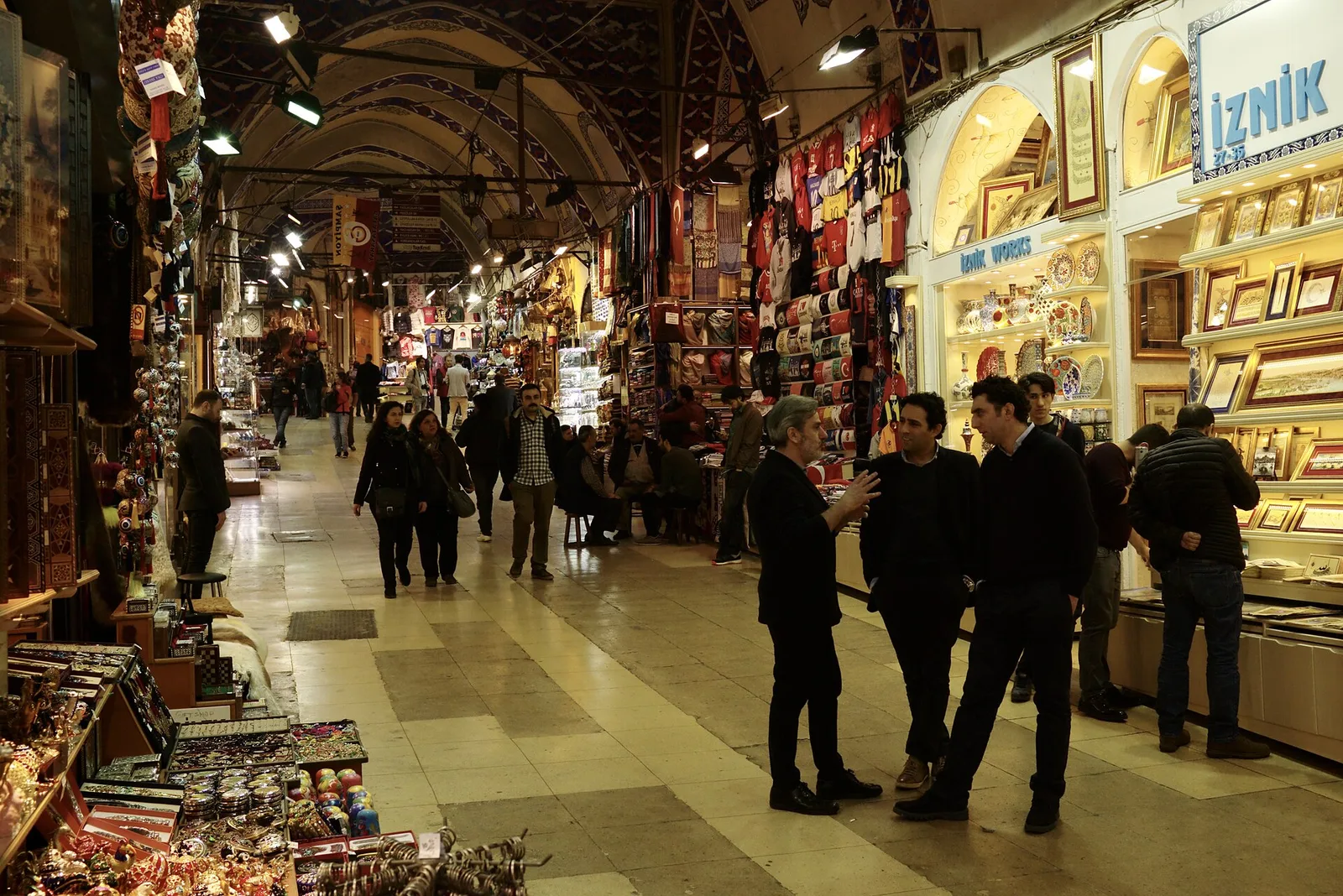
The Grand Bazaar
More than four thousand shops under vaults, and a map nobody manages to hold in their head.
- Builtfrom 1455 onwards
- DistrictFatih
It began as two stone buildings for storing cloth, put up soon after the conquest, and grew over and around them for five centuries. The lanes still carry the names of the trades: the jewellers', the hatmakers', the mirror-makers'.
There is a clear difference between the main arcades, built for people passing through once, and the side hans, where work still happens. Haggling is expected in the first and poor form in the second.
Closed on Sundays and religious holidays. A rainy day is the best time to come: all of it is under a roof.
What to look for
- The Cevahir Bedesten, the original fifteenth-century stone core at the middle of it — everything else grew around that.
- The side hans: Zincirli, Çukur — courtyards of workshops where work still happens and nobody calls you in.
- The jewellers' street, Kalpakçılar, which is the spine of the bazaar and where the gold is.
- The painted ceilings of the main arcades, which almost nobody looks at.
Before you go
- Closed on Sundays and religious holidays.
- Haggling is expected in the main arcades and poor form in the hans. Start at half and stop where it makes sense.
- Keep a landmark for getting out: the twenty-two gates have names, and that is how you find your way back.
- A rainy day is the best time — all of it is under a roof.
Nearby
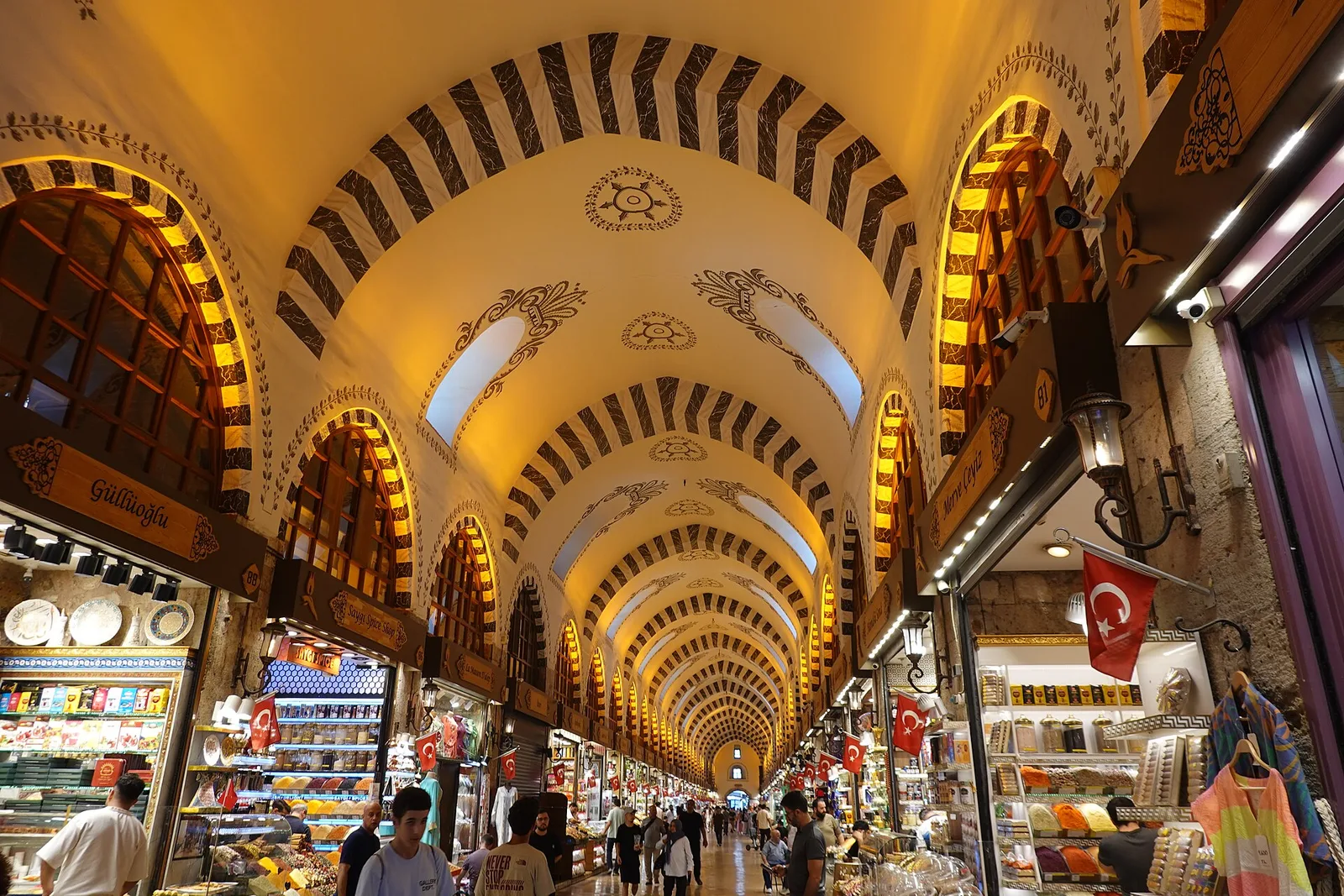
The Spice Bazaar
An L of vaults beside the harbour, built to pay for the mosque next door.
Read more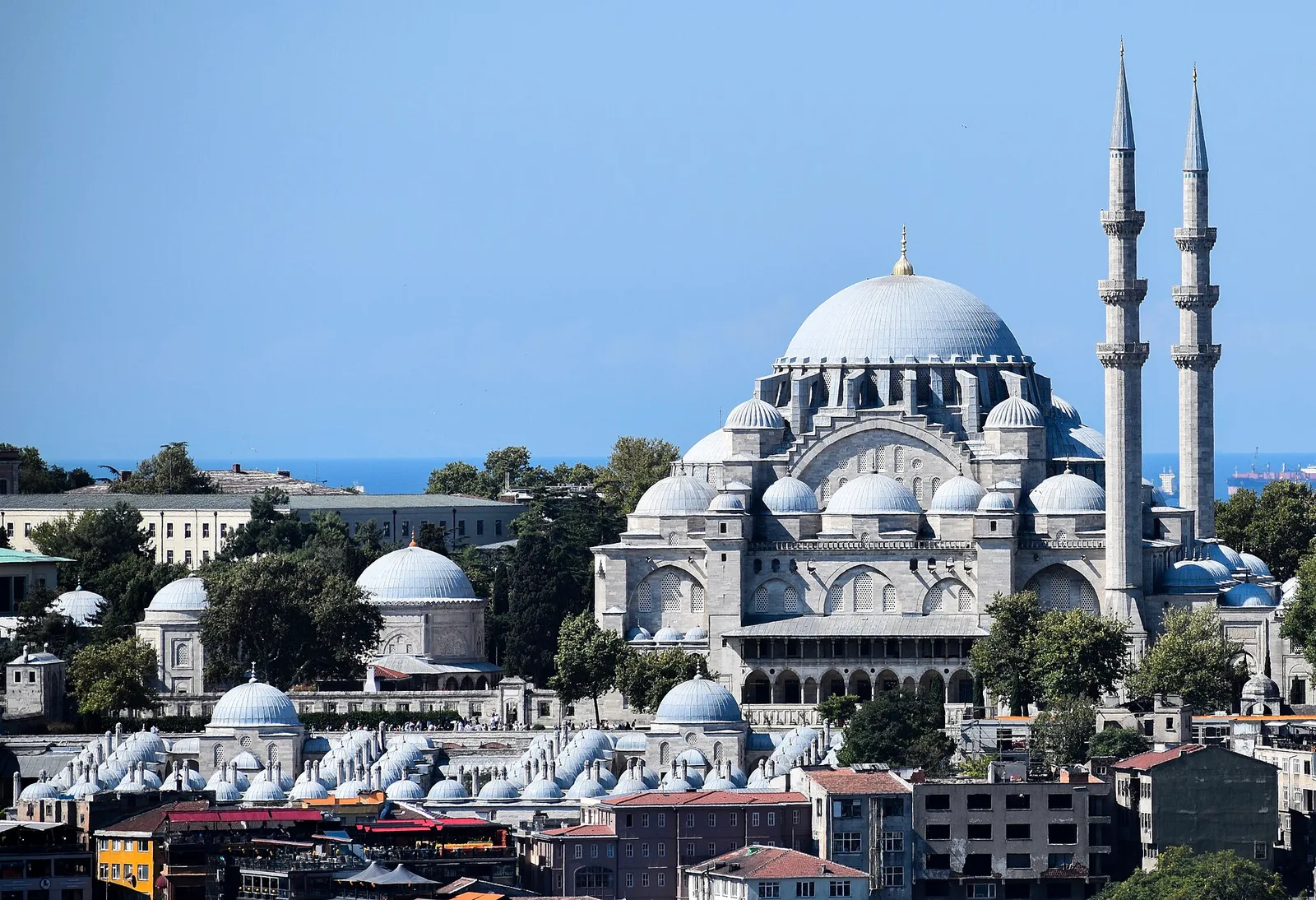
The Süleymaniye Mosque
The mosque Sinan built at his height, on the one hill from which you see the whole city.
Read more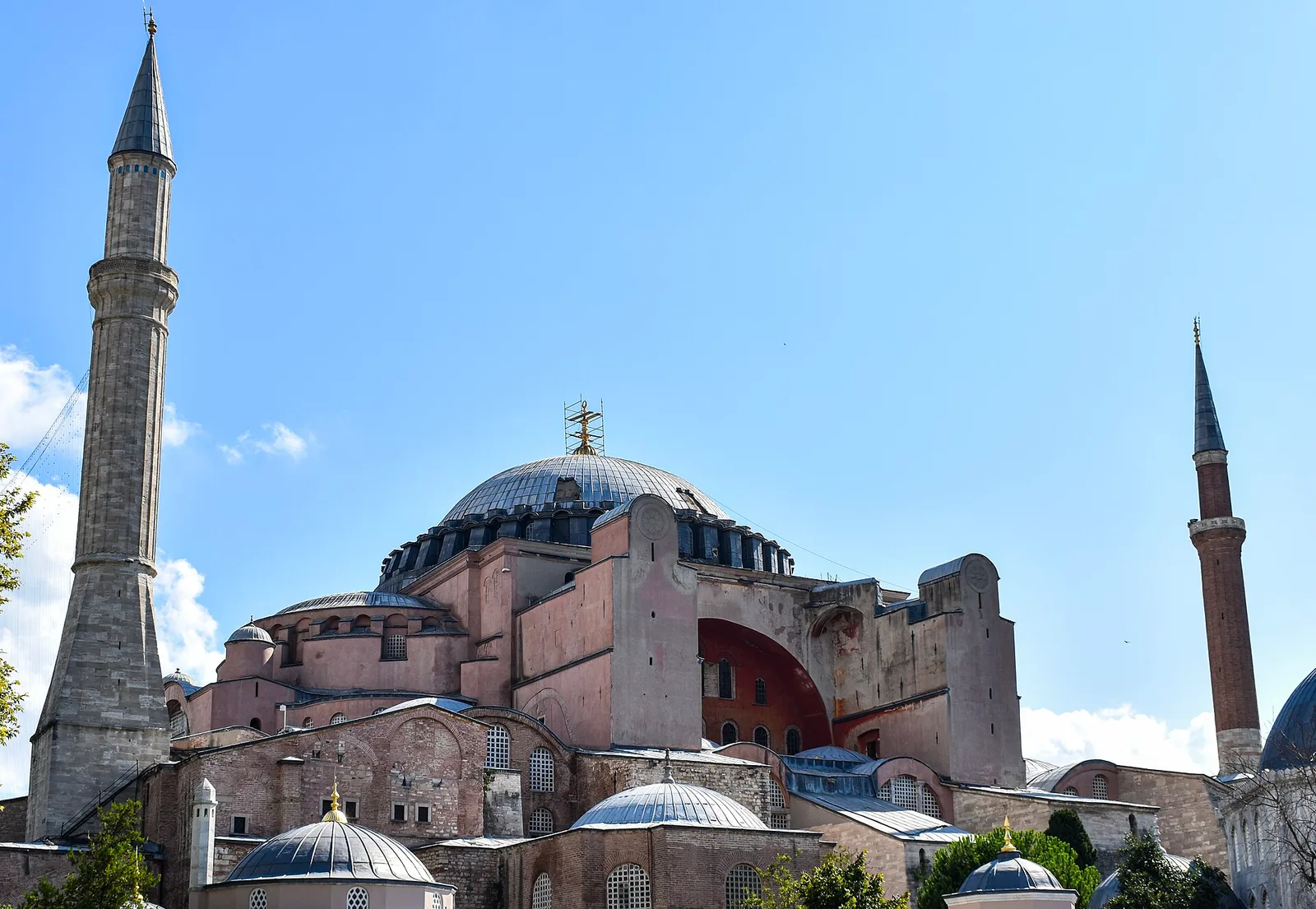
Hagia Sophia
For a thousand years the largest cathedral in the world, then a mosque, then a museum, and a mosque again today.
Read more