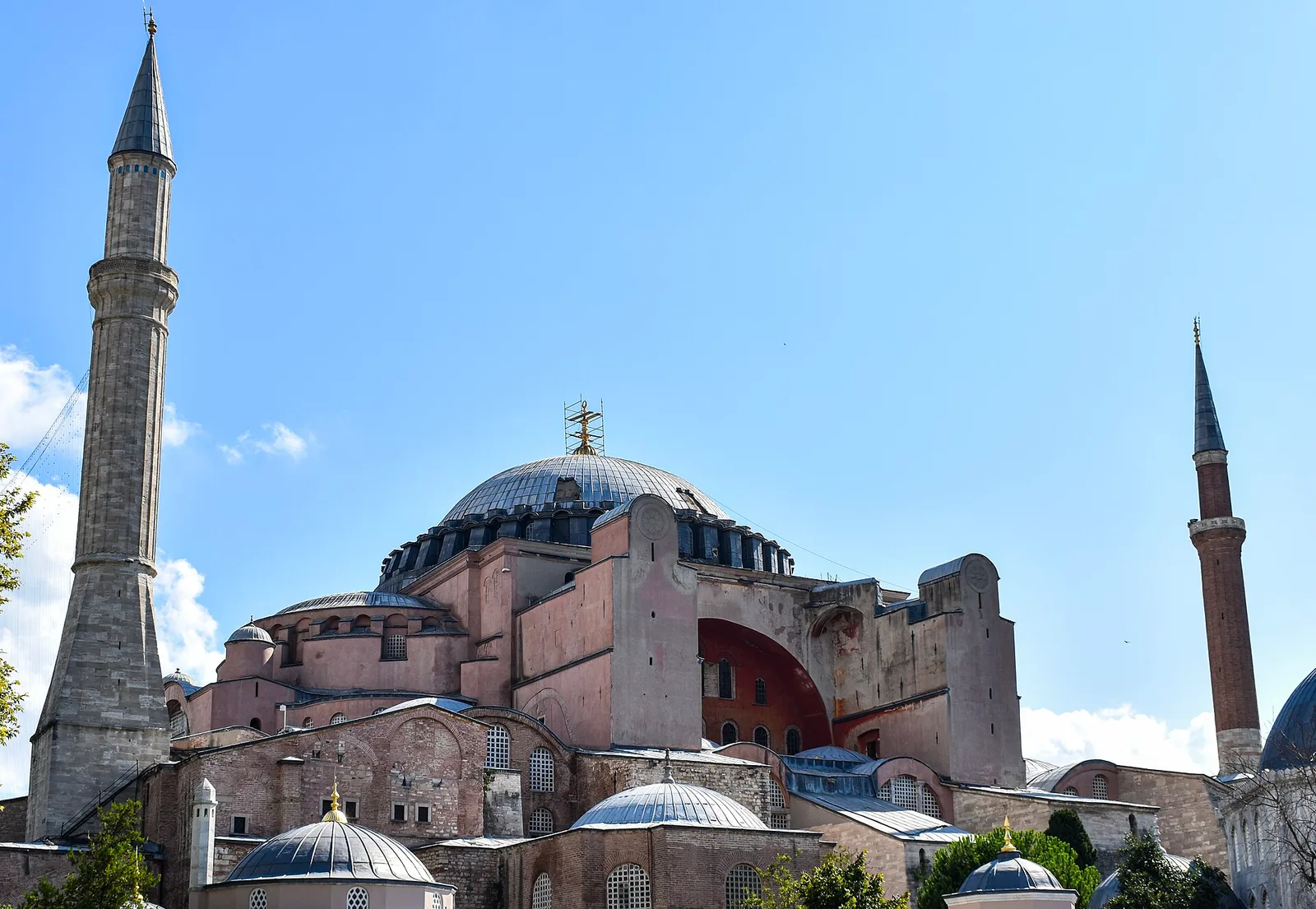
Hagia Sophia
For a thousand years the largest cathedral in the world, then a mosque, then a museum, and a mosque again today.
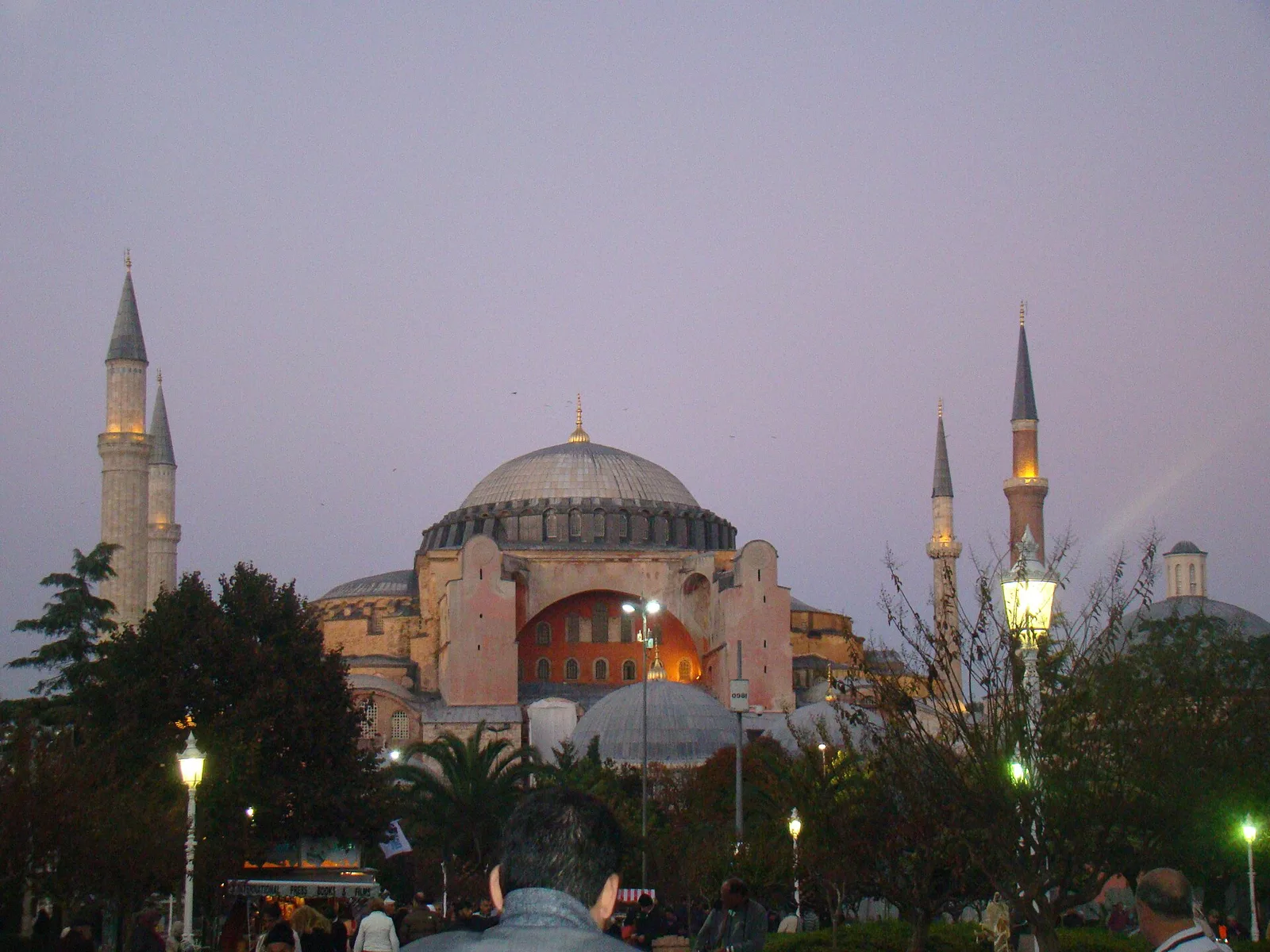
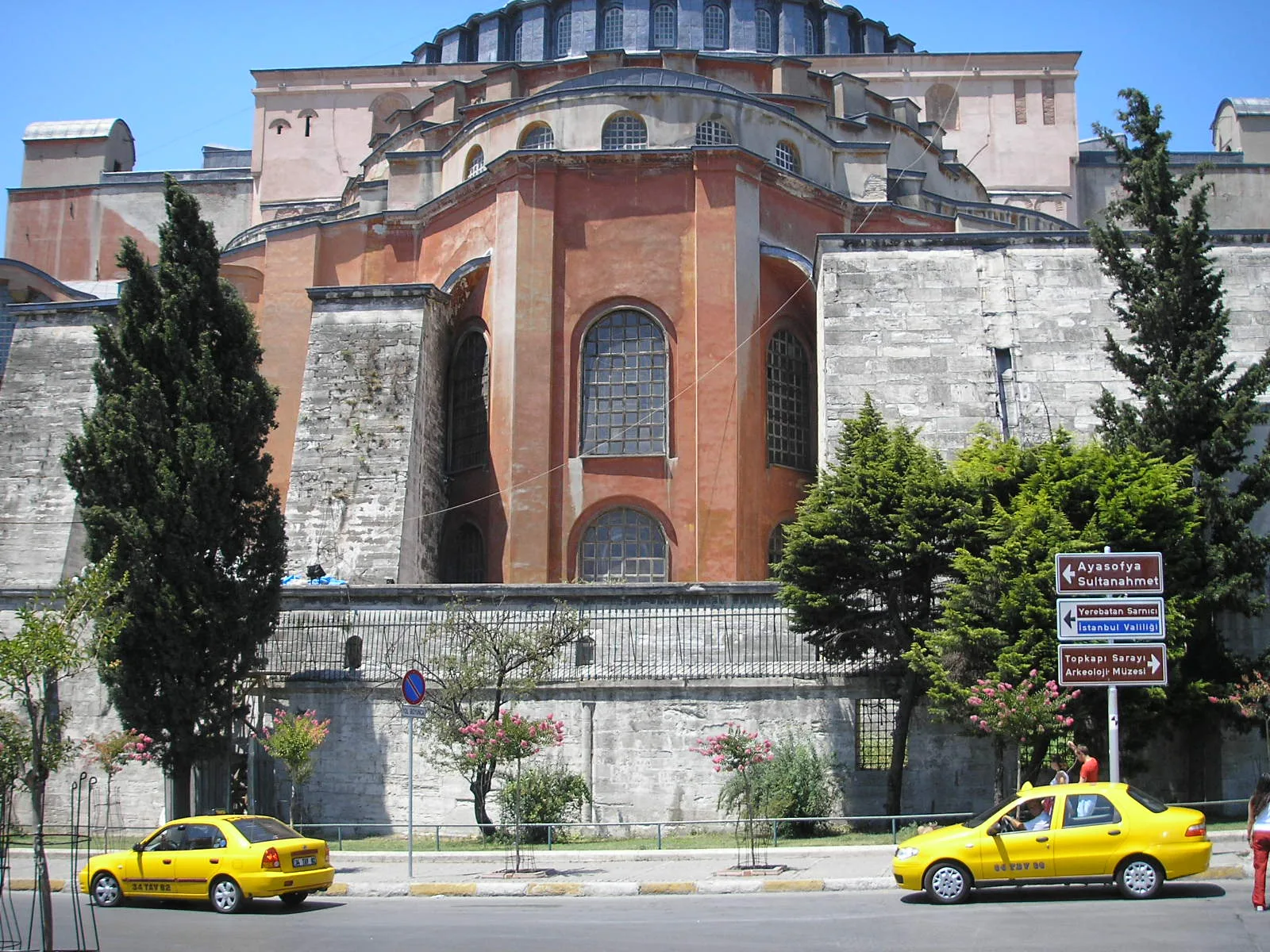
- Built537, under Justinian
- DistrictFatih
- UNESCO World Heritage
The dome is thirty-one metres across and appears to rest on nothing. The trick is the forty windows around its base: light comes through them in a row and visually cuts the dome away from the building beneath — which was precisely the intention in the sixth century.
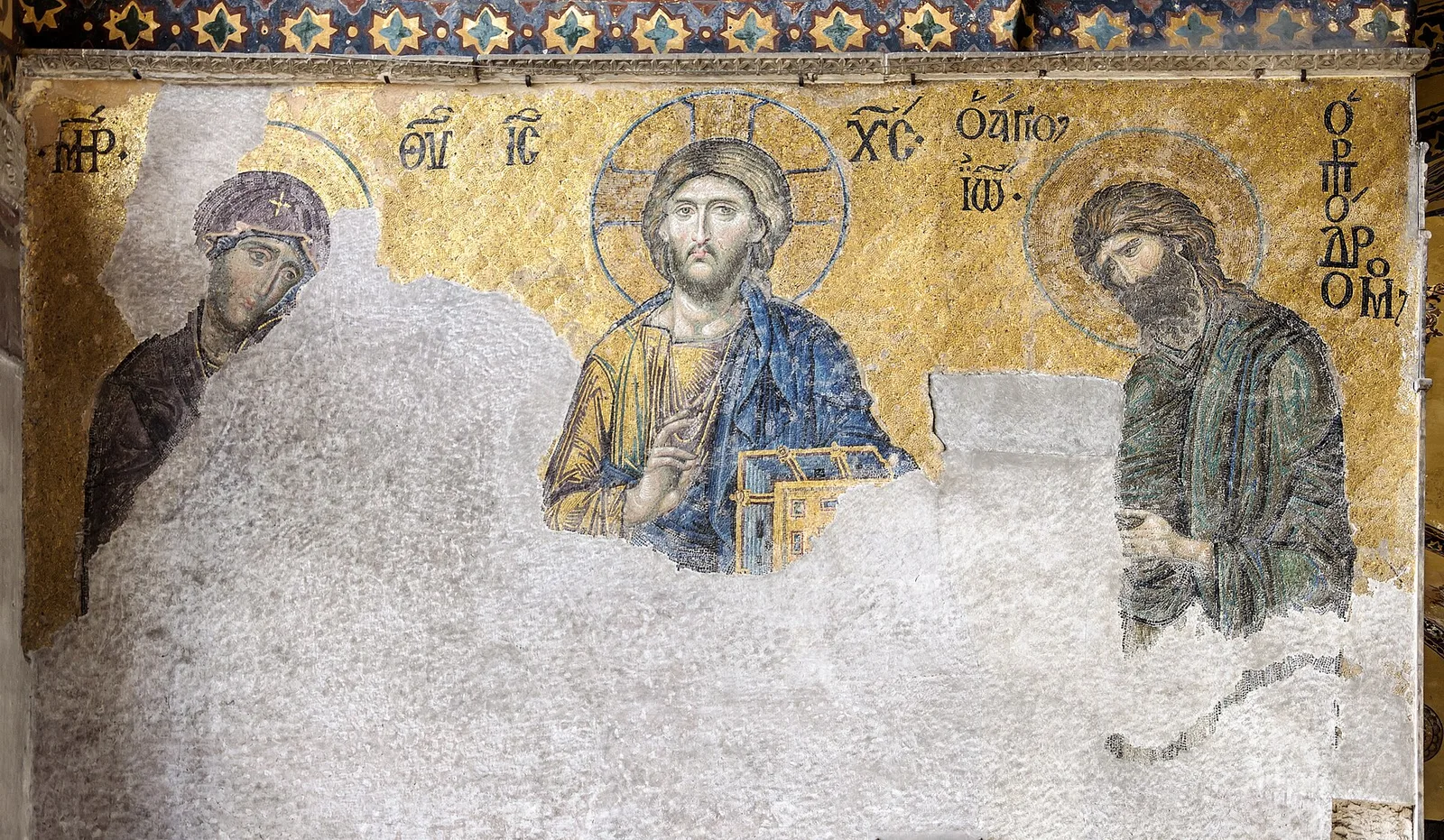
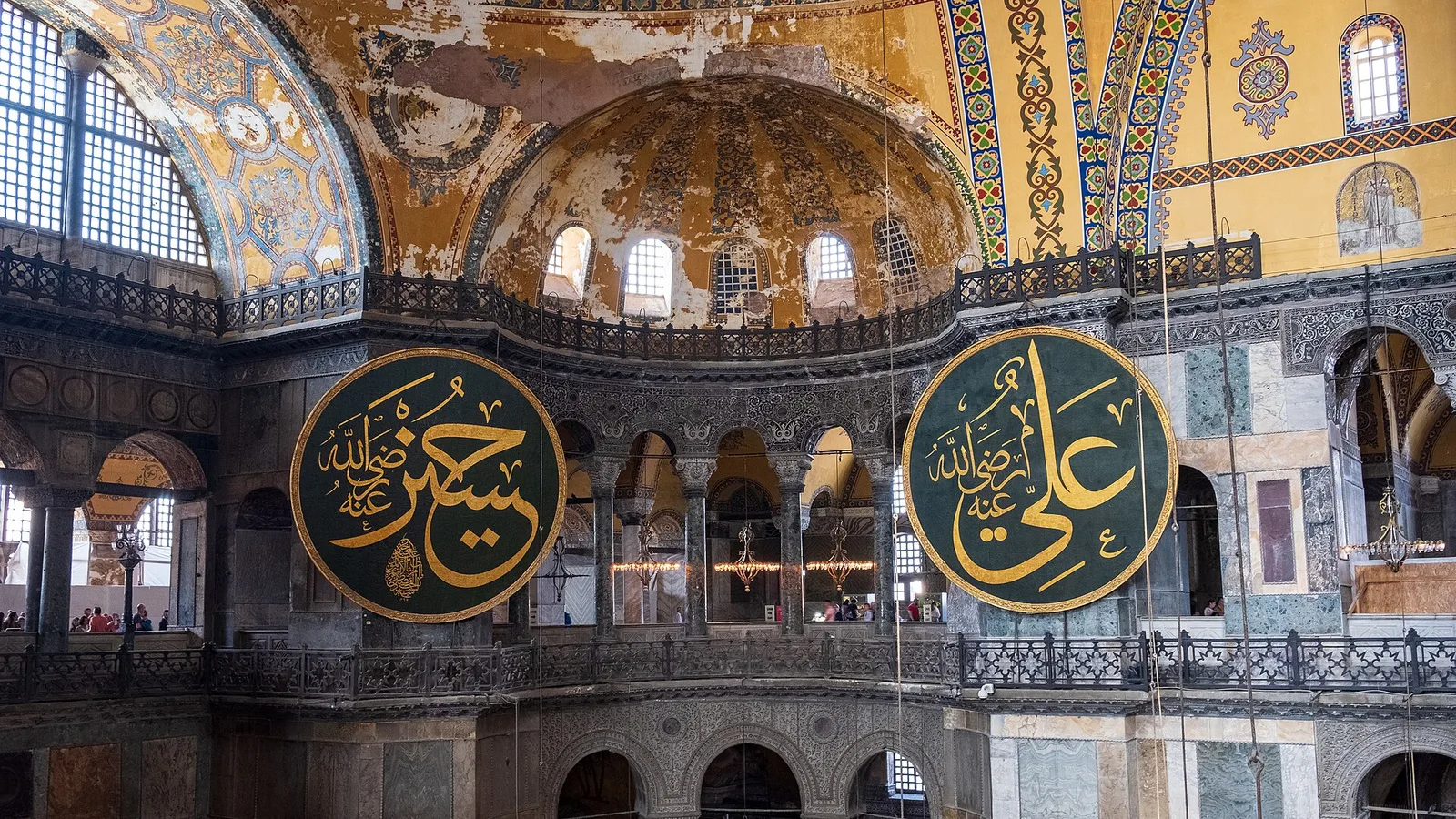
It was a church for nine hundred years, a mosque from 1453, a museum between 1935 and 2020, and it functions as a mosque again. The Byzantine mosaics are still there; the thirteenth-century Deesis in the upper gallery is what makes the climb worth it.
Because it is in religious use it closes to visitors at prayer times, and for longer at Friday midday. Shoulders and knees covered; women cover their hair.
What to look for
- The Deesis mosaic in the upper gallery — thirteenth century, and the most human face of Christ Byzantine art produced.
- The forty windows around the base of the dome: that row of light is what makes it look suspended.
- The Viking runes scratched into a gallery parapet — one of the emperor's guards carved his name there in the ninth century.
- The porphyry columns, taken from older Roman buildings; no two of them match.
Look around in 360°
Before you go
- Closed to visitors during the five prayers, and on Fridays from midday into the early afternoon.
- Shoulders and knees covered; women cover their hair. Scarves are lent at the door, but a light one in your bag is more comfortable.
- An hour is enough to see it; two if you go up to the gallery and stay with the Deesis.
- Shoes come off at the entrance to the prayer area.
Nearby
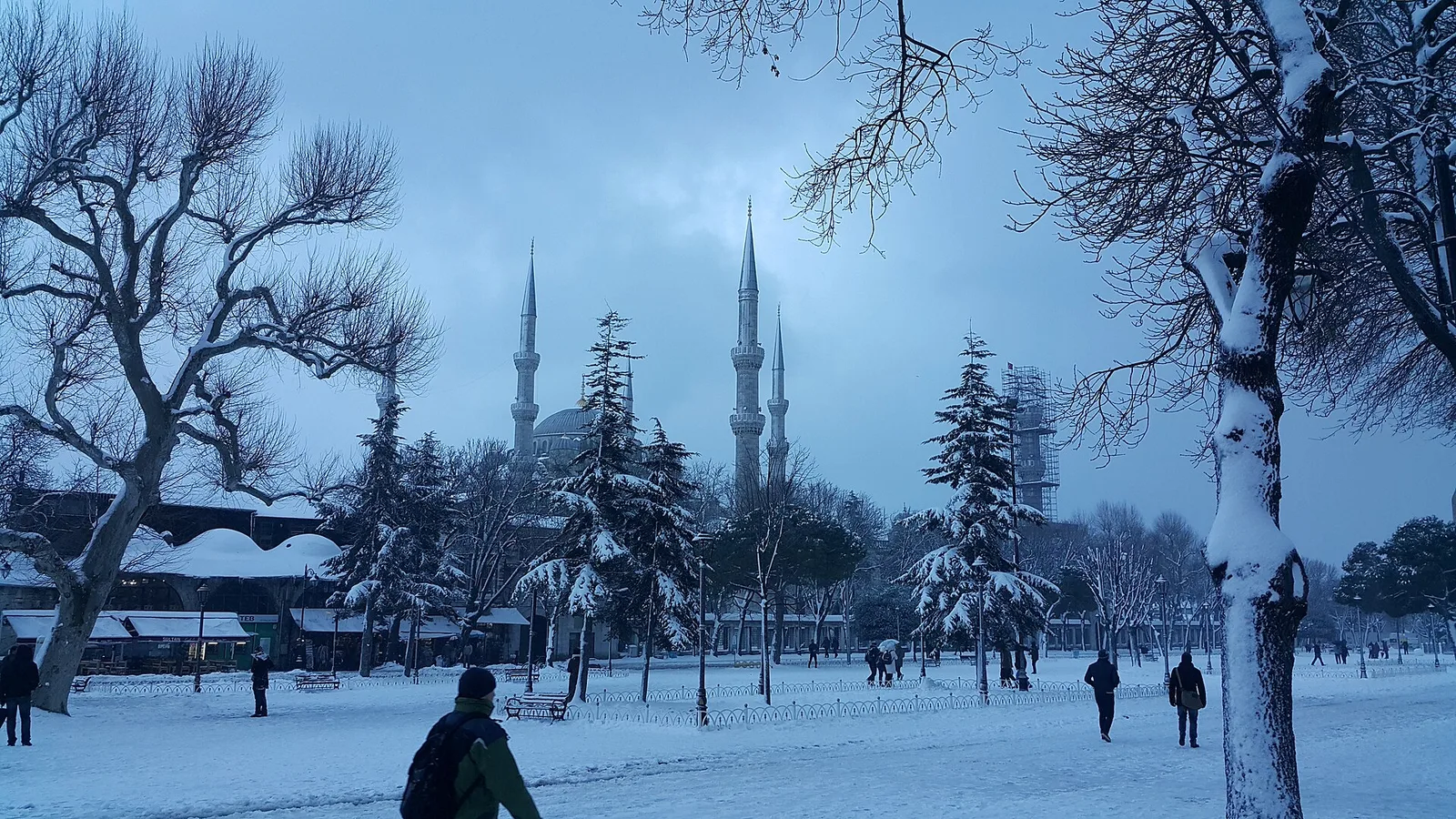
The Blue Mosque
Twenty thousand İznik tiles inside, six minarets outside, and still a working neighbourhood mosque.
Read more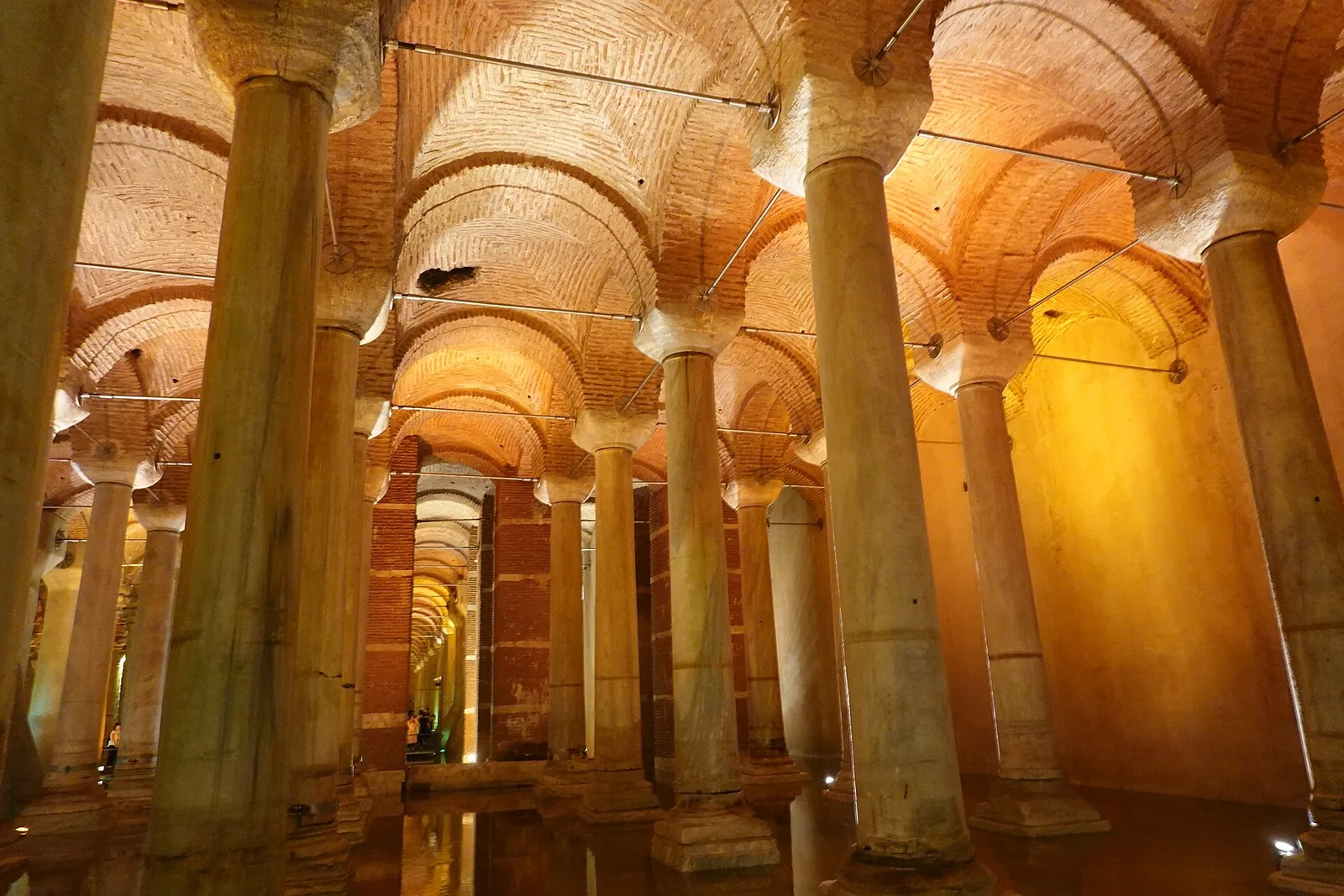
The Basilica Cistern
Three hundred and thirty-six columns under the street, holding the water of a city that could be besieged.
Read more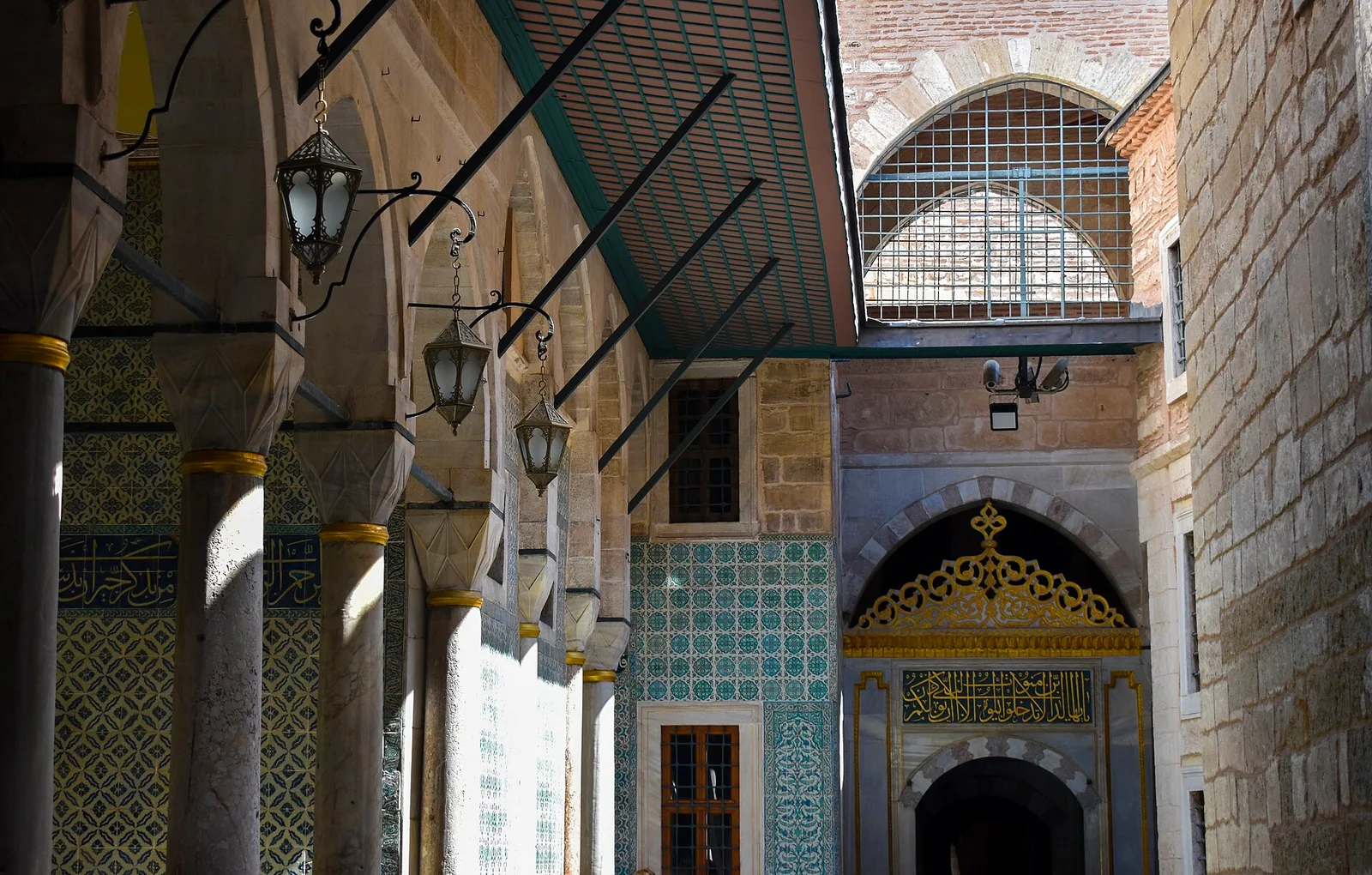
Topkapı Palace
Four courtyards instead of one building — the logic of a campaign tent, in stone.
Read more