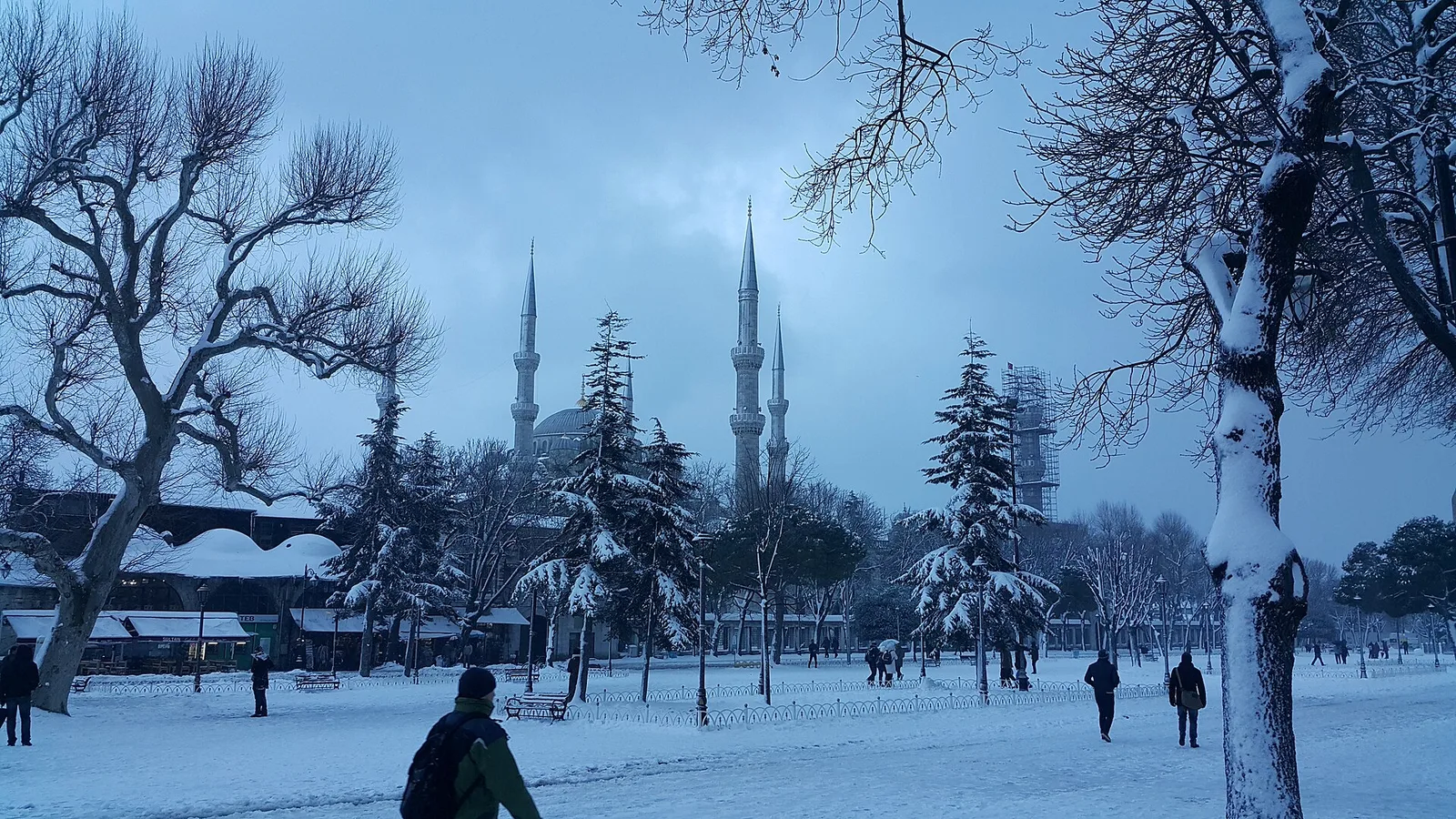
The Blue Mosque
Twenty thousand İznik tiles inside, six minarets outside, and still a working neighbourhood mosque.
- Built1609–1616
- DistrictFatih
- UNESCO World Heritage
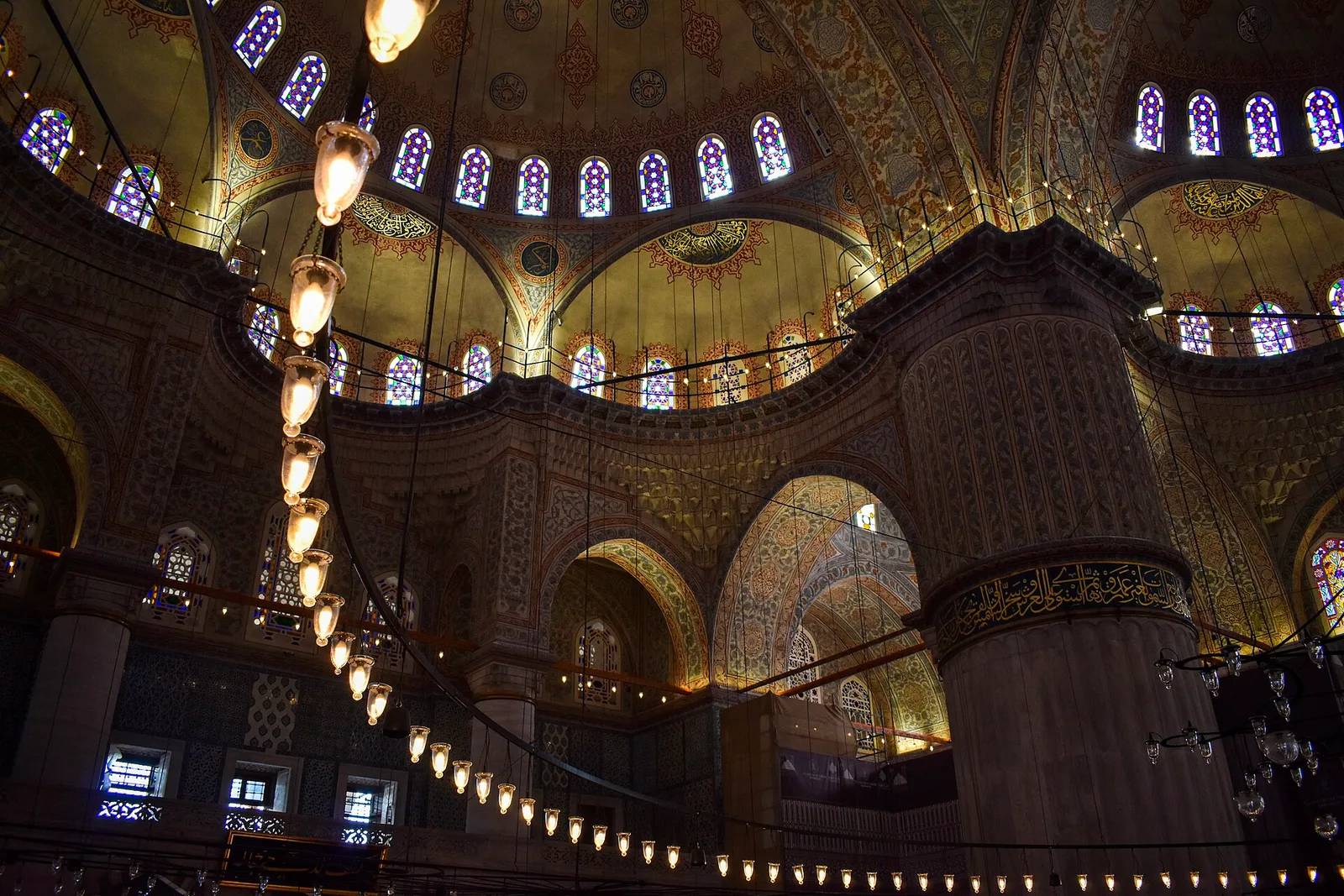
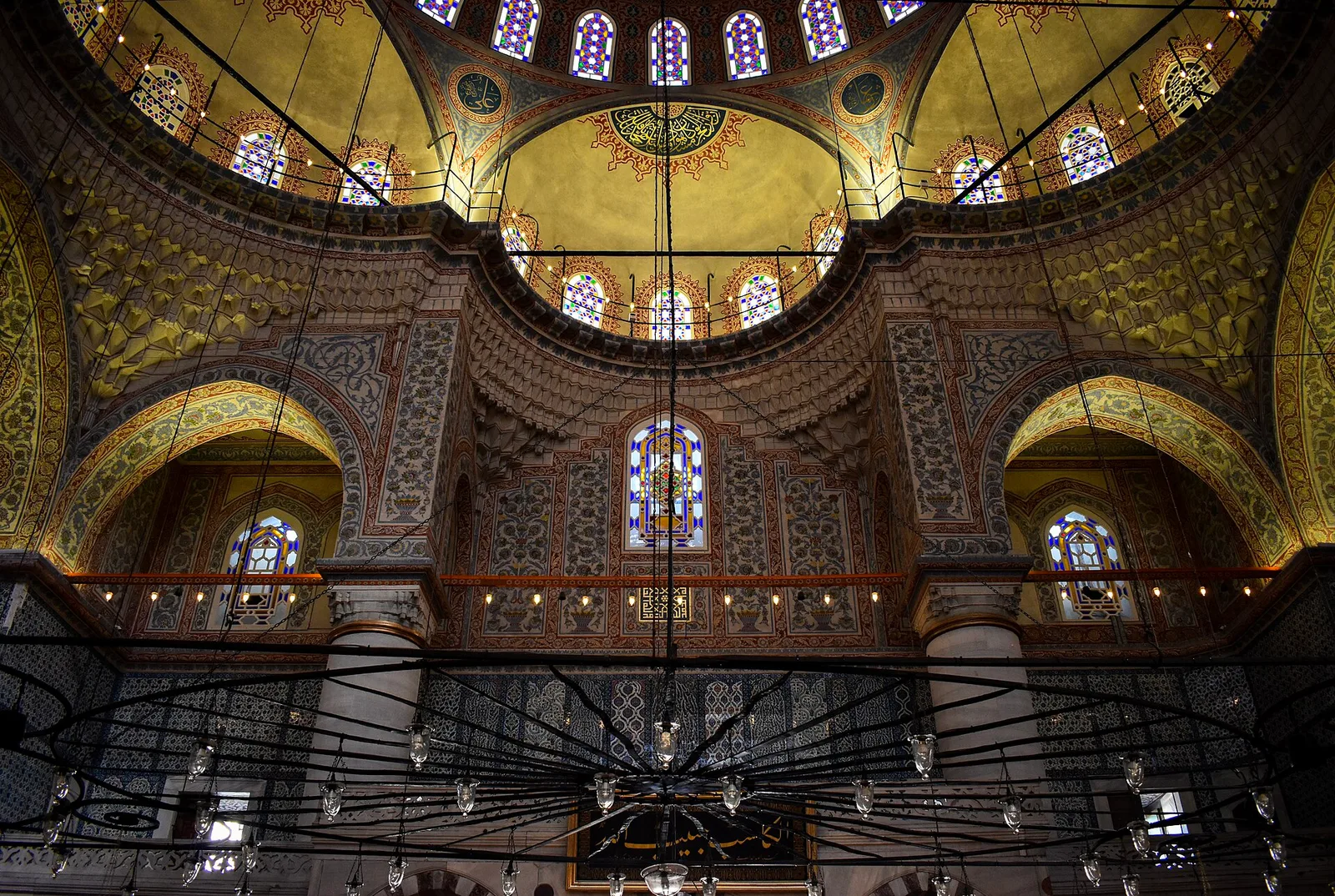
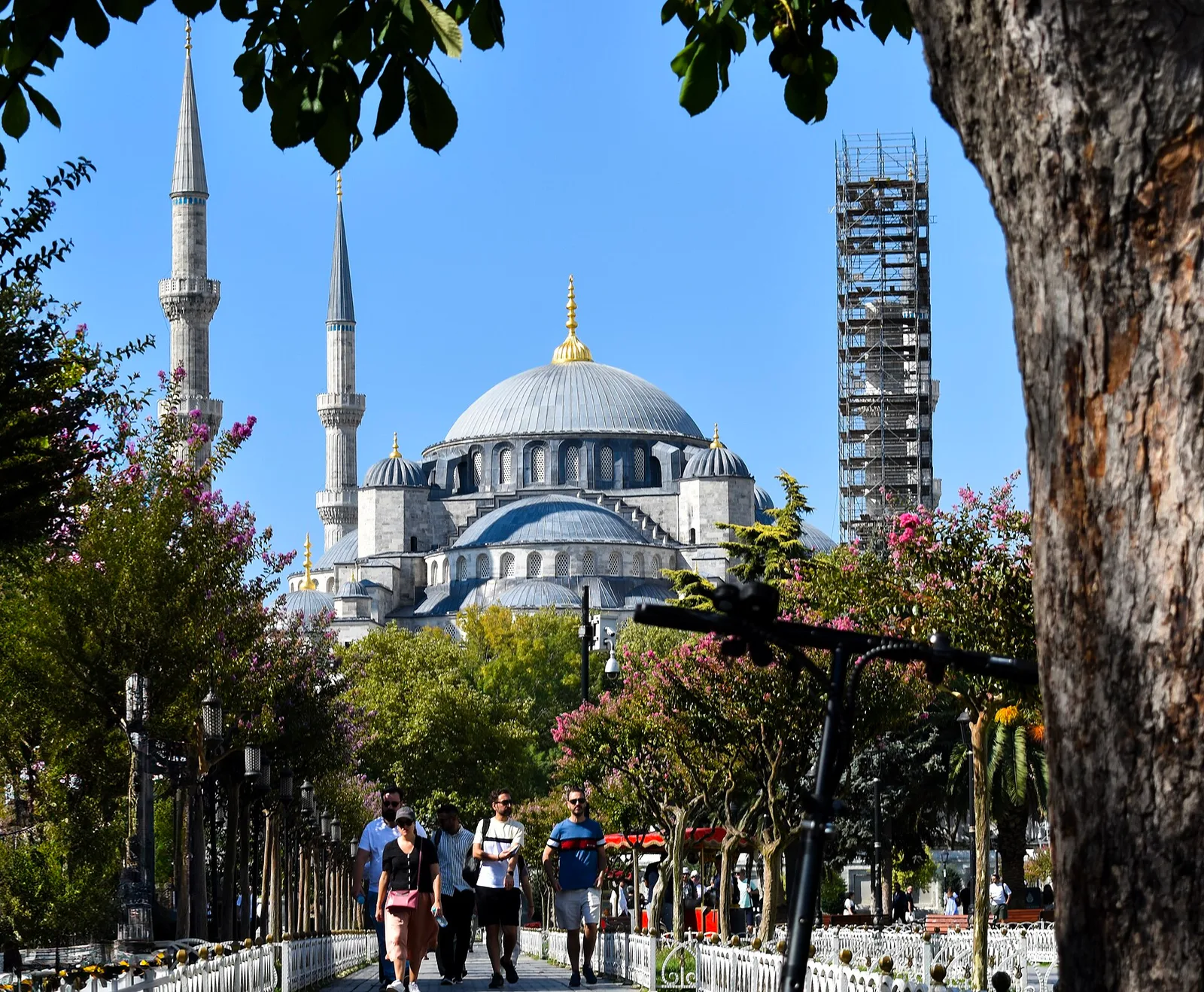
The name comes from the tiles: more than twenty thousand İznik pieces, most of them blue, covering the upper galleries. From ground level you barely see them — which is why the mosque disappoints anyone who walks in quickly and convinces anyone who looks up and waits.
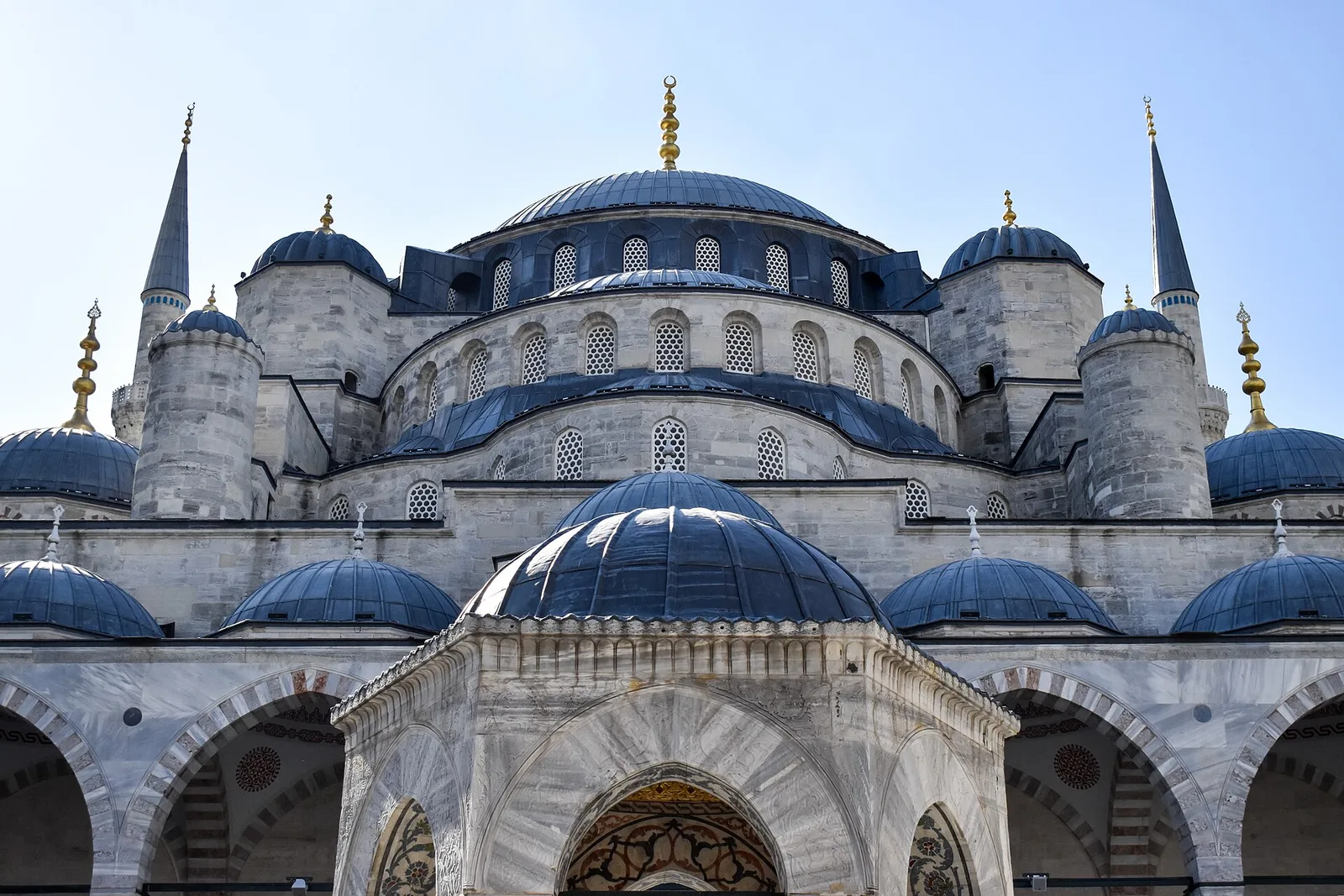
The six minarets caused a scandal when they were built, because only the mosque at Mecca had six. The answer was to build a seventh one there.
It faces Hagia Sophia across a garden, and each is in view of the other. It closes to visitors during prayers.
What to look for
- The İznik tiles in the upper galleries — more than twenty thousand, and the reason for the name. You barely see them from below: look up and wait.
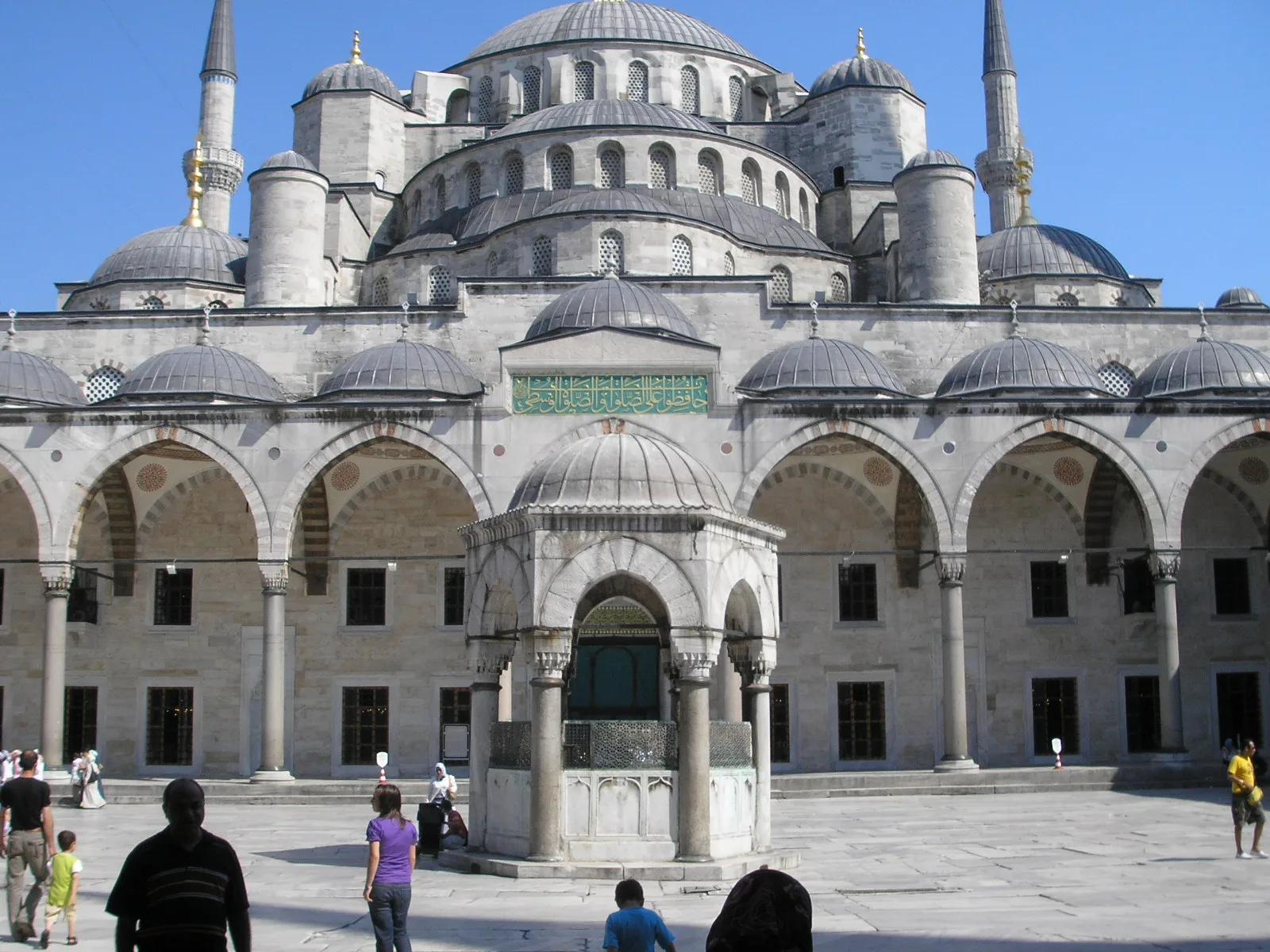
- The courtyard, the largest of any Ottoman mosque in Istanbul, and the right way in the first time.
- The six minarets, which at the time only the mosque at Mecca had.
- The iron chain at the side door: it forced the sultan to lower his head when riding in.
Look around in 360°

Before you go
- Go in through the courtyard, not the side door: the first view is from the courtyard.
- Closed to visitors for about half an hour at each prayer, and longer at Friday midday.
- Thirty to forty minutes is enough. It is a working mosque, not a museum.
- Plastic bags for shoes at the door; bring your own if you can, the queue is shorter.
Nearby
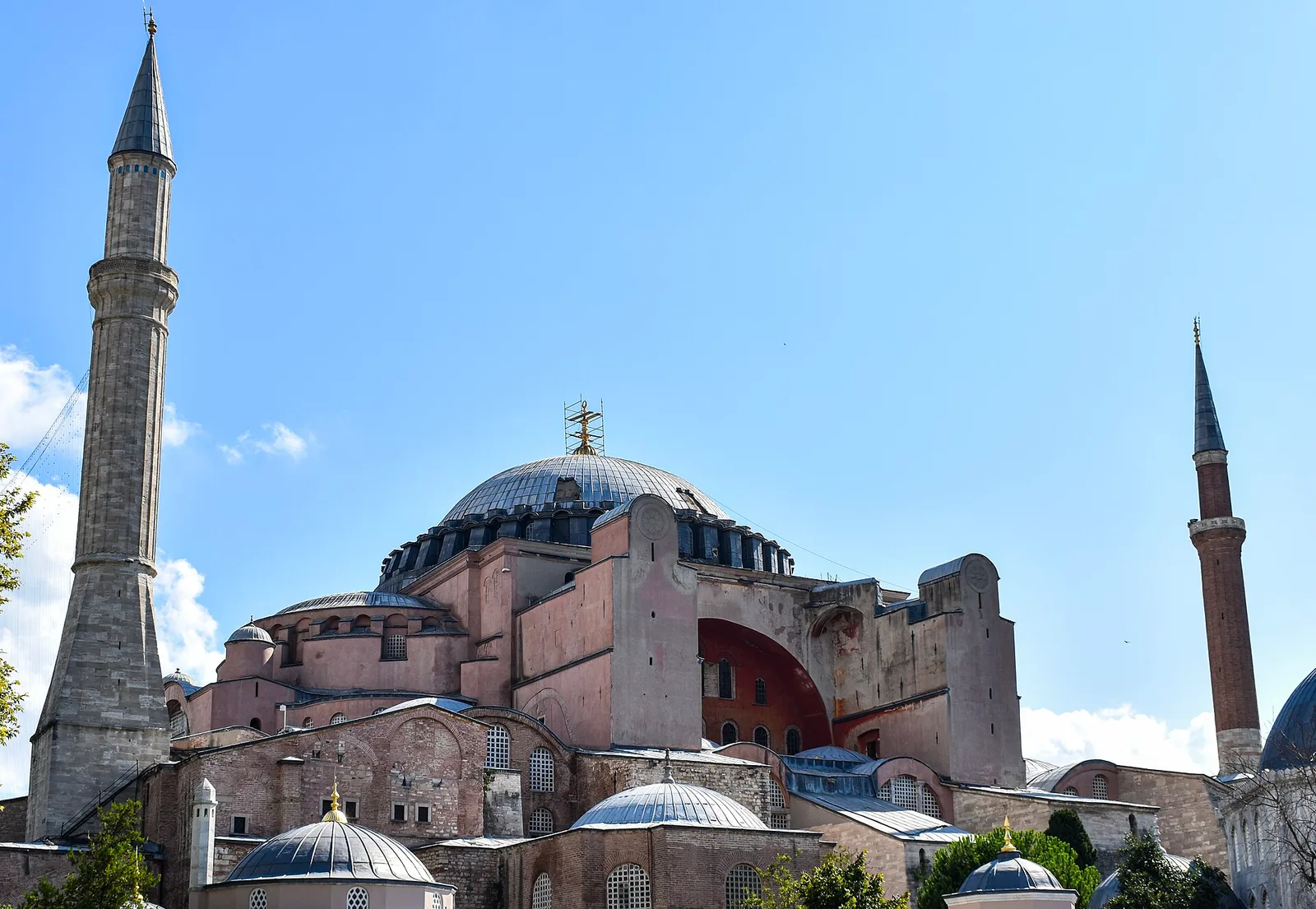
Hagia Sophia
For a thousand years the largest cathedral in the world, then a mosque, then a museum, and a mosque again today.
Read more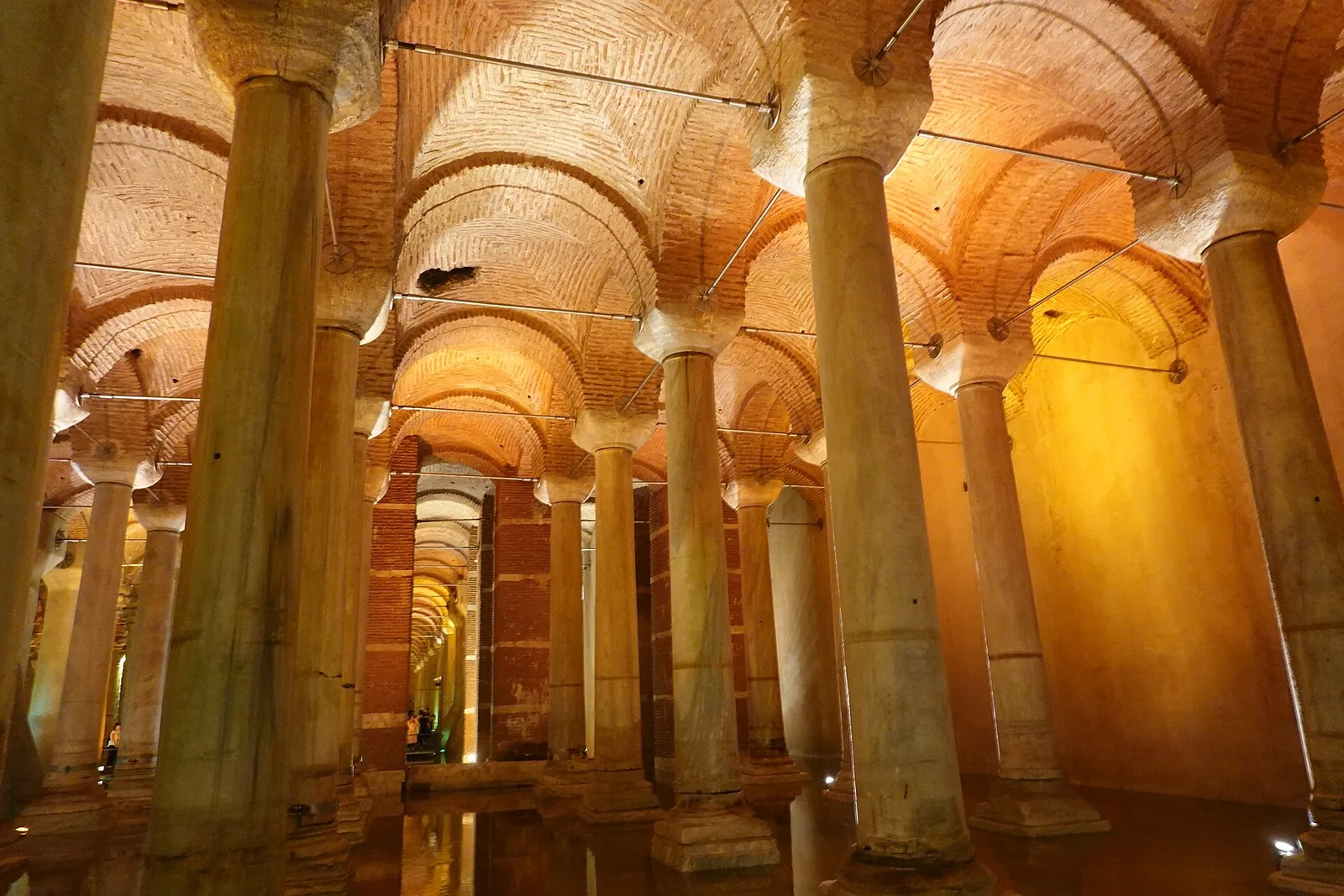
The Basilica Cistern
Three hundred and thirty-six columns under the street, holding the water of a city that could be besieged.
Read more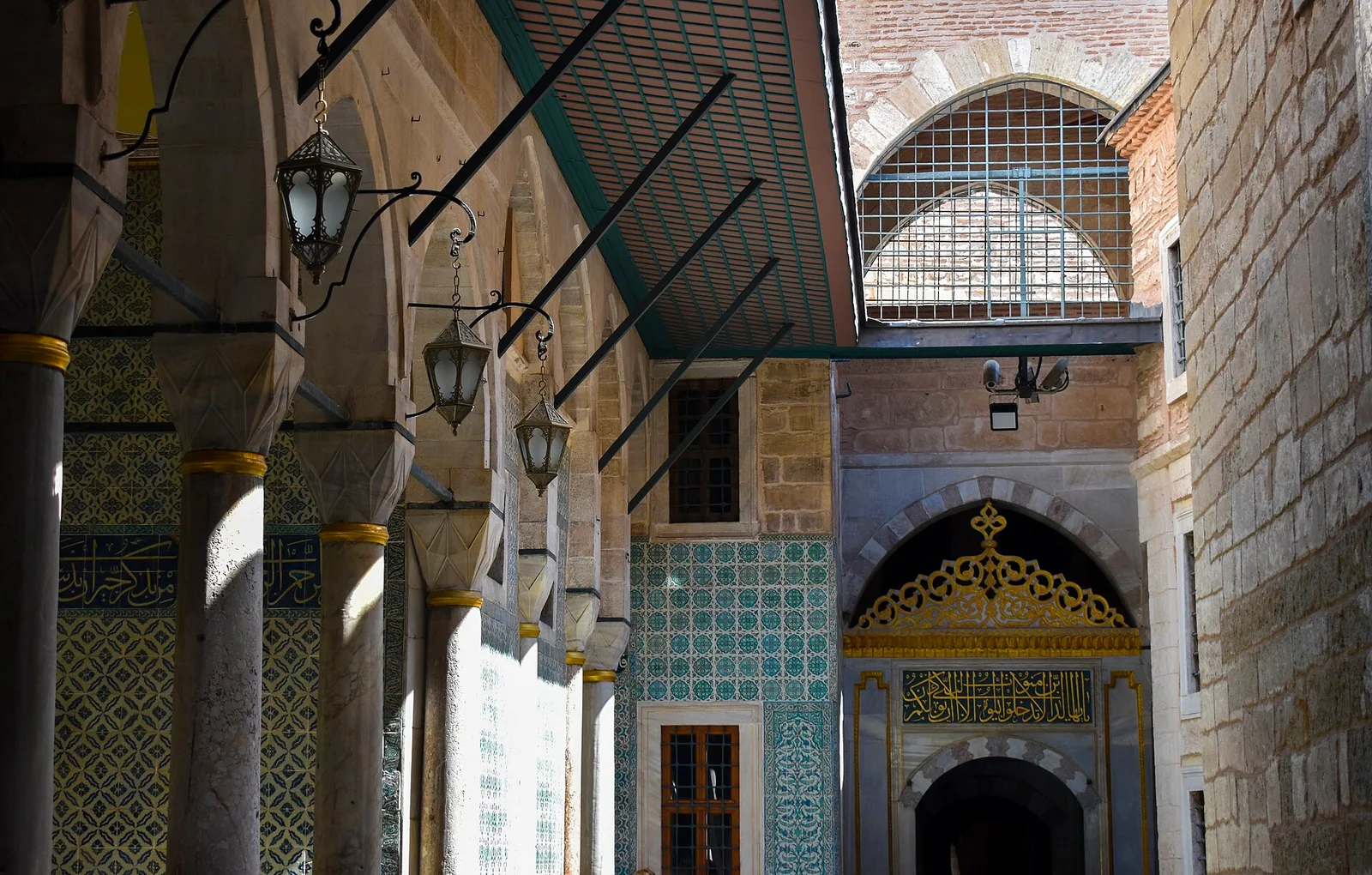
Topkapı Palace
Four courtyards instead of one building — the logic of a campaign tent, in stone.
Read more