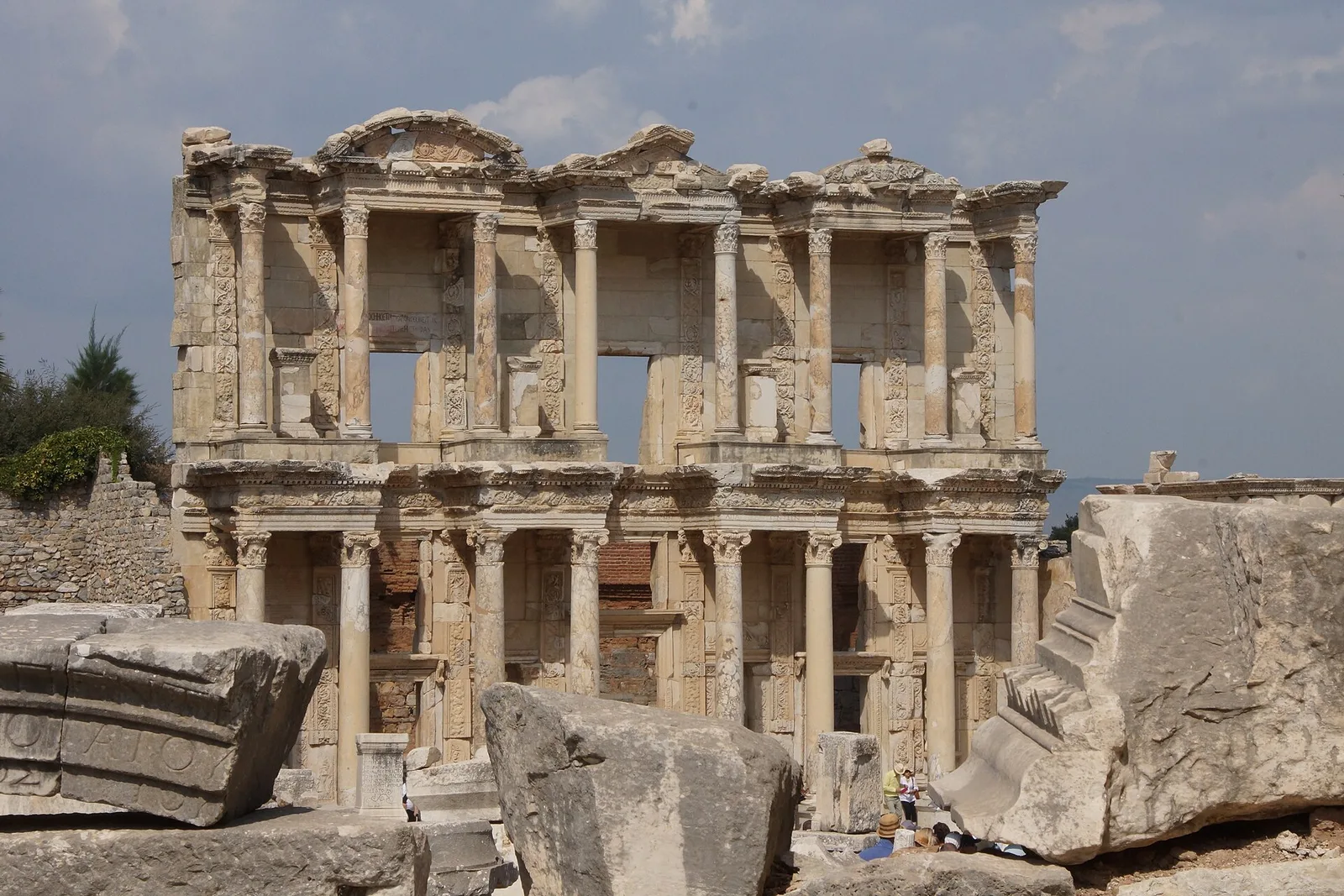
Pamukkale and Hierapolis
Thermal water that leaves calcium wherever it runs, and a city built on top because of it.
- Builtnatural terraces; the city from the second century BC
- DistrictDenizli
- UNESCO World Heritage
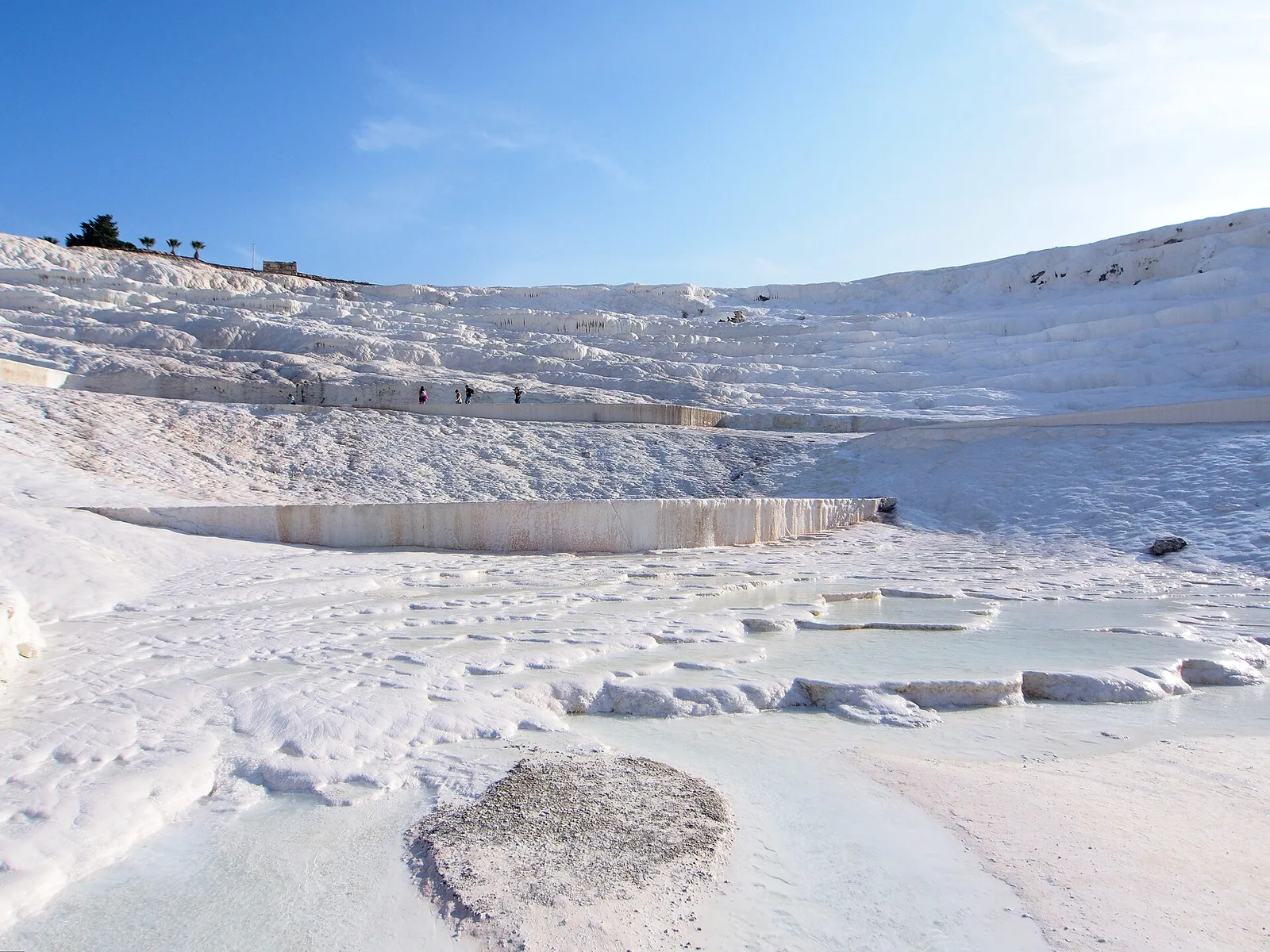
The white terraces are neither ice nor salt: they are travertine, left behind as the water cools. You walk them barefoot, compulsorily — shoes damage the surface — and the stone is rough and warm.
Above them stands Hierapolis, founded because the water was held to be curative. It has a remarkably intact Roman theatre and an enormous necropolis, precisely because a great many people came here ill and did not leave.
The water is rotated through a few terraces at a time so the rest can recover. Not all of them will be full on the day you go.
What to look for
- The terraces at first light, before the coaches: the water is still warm and the stone is empty.
- The Roman theatre at Hierapolis, up the hill, remarkably intact and almost always deserted.
- The necropolis, with more than a thousand tombs — it is large because a great many people came here ill and did not leave.
- The ancient pool, with fallen marble columns on its floor, where you can still swim (separate ticket).
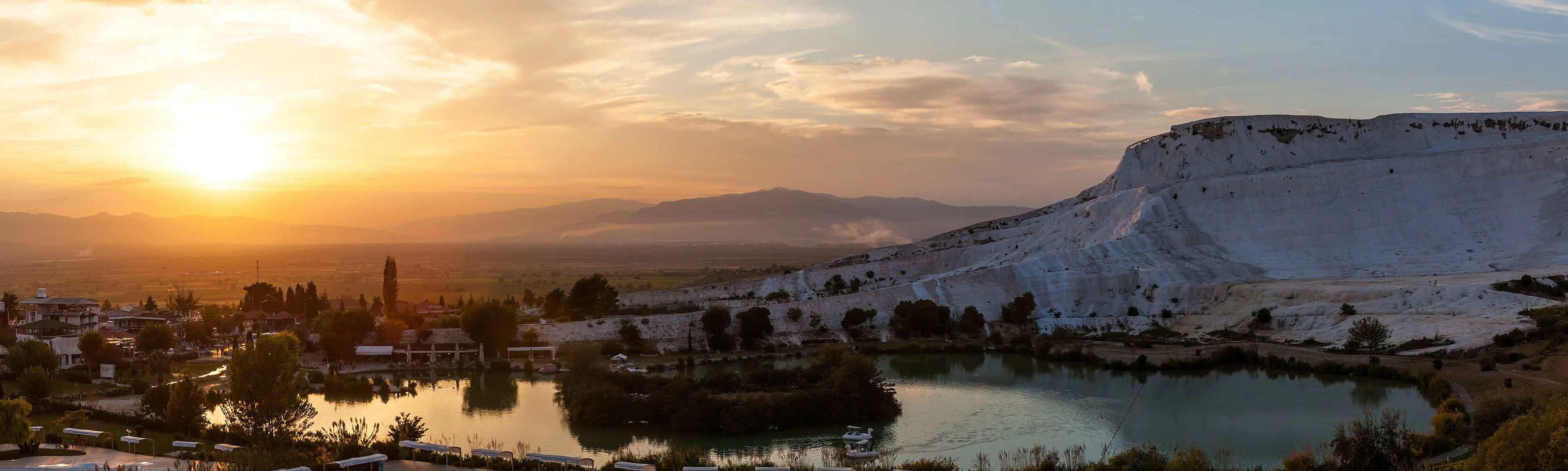
Look around in 360°
Before you go
- You walk the terraces barefoot, compulsorily: shoes damage the travertine. Bring a bag for them.
- The stone is rough and the water is slippery. Go slowly; everybody who hurries falls.
- The water is rotated so the terraces can recover. Not all of them will be full on the day you go.
- Go in by the upper gate (Hierapolis) and walk down through the terraces: barefoot uphill is far worse.